Choosing the right neon sign for your living room is both an art and a science. It requires careful consideration of design, placement, color, and functionality. When selected thoughtfully, a neon sign can transform your living space into a vibrant and personalized haven. Rather than treating it as a mere decorative accessory, view your neon sign as an extension of your personality and lifestyle. With the right approach, it can elevate your living room from ordinary to extraordinary, creating an atmosphere that is both visually stunning and emotionally engaging.
Why Neon Signs Are a Modern Living Room Essential
Interior design has evolved far beyond traditional artwork and static décor. Today, homeowners are increasingly drawn to lighting elements that not only illuminate a space but also express personality and mood. Among these, neon signs have emerged as a striking and versatile option for living rooms. Their vibrant glow, customizable designs, and contemporary appeal make them a powerful statement piece that blends art with function.
Unlike conventional lighting fixtures, neon signs bring a dynamic visual experience into your home. They create ambiance, highlight architectural features, and can even serve as conversation starters. Whether you prefer a minimalist aesthetic or a bold, eclectic look, neon signs offer endless possibilities to transform your living room into a stylish and inviting environment.
Understanding Different Types of Neon Signs

Traditional Glass Neon vs. LED Neon
When choosing a neon sign, it is essential to understand the difference between traditional glass neon and modern LED neon alternatives. Traditional neon signs use glass tubes filled with gas, which produce a classic, warm glow. While they offer an authentic retro feel, they tend to be fragile, energy-intensive, and require more maintenance.
LED neon signs, on the other hand, are made from flexible silicone or PVC tubing with embedded LED lights. They mimic the appearance of traditional neon but are far more durable, energy-efficient, and safe for indoor use. For most living room applications, LED neon is the preferred choice due to its longevity and ease of installation.
Read more: Art neon sign collections
Custom vs. Pre-Made Designs
Another important distinction lies between custom-made and ready-made neon signs. Custom signs allow you to personalize text, colors, fonts, and size, making them ideal for homeowners who want something truly unique. Pre-made designs, however, are more affordable and readily available in a wide range of styles, from inspirational quotes to abstract shapes.
Choosing between the two depends on your budget, timeline, and design vision. If you are aiming for a signature look, investing in a custom piece can elevate your living room décor significantly.
How to Choose the Right Neon Sign for Your Living Room
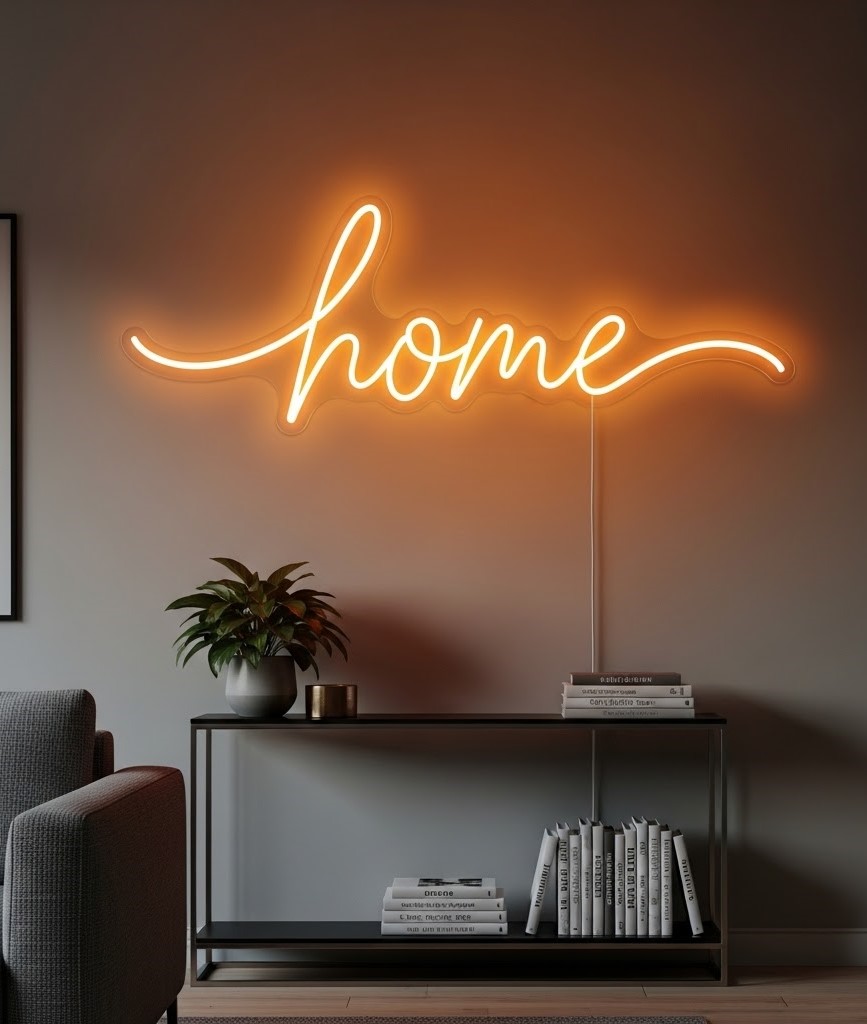
Consider Your Interior Design Style
Your neon sign should complement the overall aesthetic of your living room rather than clash with it. For modern and minimalist interiors, simple line designs or monochromatic text signs work best. In contrast, bohemian or eclectic spaces can handle bold colors and intricate patterns.
If your living room features industrial elements such as exposed brick or metal finishes, a neon sign with a vintage or retro vibe can enhance the space. For Scandinavian-inspired interiors, opt for subtle hues like warm white or soft pastel tones to maintain a clean and cozy atmosphere.
Size and Placement Matter
The size of your neon sign plays a crucial role in its visual impact. A sign that is too small may get lost on a large wall, while an oversized piece can overwhelm the room. Measure your wall space carefully and consider how the sign will interact with existing furniture and décor.
Placement is equally important. Popular options include:
- Above the sofa as a focal point
- On a gallery wall for added dimension
- Near a window to enhance nighttime ambiance
- In a corner to create a cozy reading nook
Proper placement ensures that the neon sign enhances the room without disrupting its balance.
Color Selection and Mood Setting
Color is one of the most powerful aspects of neon signage. Different colors evoke different emotions and can significantly influence the atmosphere of your living room.
- Warm tones like red, orange, and pink create a cozy and energetic vibe
- Cool tones such as blue and green promote relaxation and calmness
- White and neutral tones offer a sophisticated and timeless look
When selecting colors, consider your existing color palette and the mood you want to achieve. A well-chosen neon color can tie the entire room together.
Read more: Pop-art neon sign collections
Creative Ideas for Living Room Neon Signs
Inspirational Quotes and Typography
Text-based neon signs are among the most popular choices for living rooms. Whether it is a motivational quote, a meaningful phrase, or a single word like “Relax” or “Dream,” typography-based designs add a personal touch to your space.
Choose fonts that align with your interior style. Script fonts convey elegance and warmth, while bold sans-serif fonts create a modern and edgy look. Keep the message concise to maintain visual clarity and impact.
Artistic Shapes and Symbols
If you prefer a more subtle approach, consider neon signs in the form of shapes or symbols. Popular options include:
- Abstract lines and geometric patterns
- Nature-inspired elements like leaves or mountains
- Icons such as hearts, stars, or lightning bolts
These designs add visual interest without overwhelming the space, making them ideal for minimalist interiors.
Personalized Family or Lifestyle Themes
For a truly unique living room, opt for a neon sign that reflects your lifestyle or family identity. This could include your family name, a special date, or a phrase that holds sentimental value. Personalized neon signs not only enhance décor but also create a sense of belonging and warmth within the home.

Energy Efficiency and Safety
Modern LED neon signs are designed with energy efficiency in mind, consuming significantly less power than traditional lighting. They also operate at lower temperatures, reducing the risk of overheating and making them safer for residential use.
Look for signs that come with certified power adapters and clear installation instructions. Safety should always be a priority, especially when installing electrical elements in living spaces.
Installation and Maintenance
Most LED neon signs are lightweight and easy to install, often requiring only wall mounts or adhesive backing. However, it is important to ensure that the mounting surface is stable and that the sign is securely fixed.
Maintenance is minimal but still necessary. Regularly dust the sign and check for any loose connections to keep it in optimal condition. Avoid placing the sign in areas with high humidity or direct sunlight to prolong its lifespan.
Budget and Long-Term Value
Neon signs are available across a wide price range, depending on size, complexity, and customization. While it may be tempting to opt for cheaper options, investing in a high-quality sign ensures better durability and performance over time.
Consider the neon sign as a long-term décor investment rather than a temporary accessory. A well-chosen piece can remain relevant and stylish for years.

Pairing with Other Lighting Elements
To create a cohesive lighting scheme, combine your neon sign with other light sources such as floor lamps, table lamps, or recessed lighting. This layered approach adds depth and dimension to your living room.
Avoid relying solely on the neon sign as the primary light source. Instead, use it as an accent to highlight specific areas or features.
Balancing with Wall Décor
If your living room already features artwork or decorative elements, ensure that the neon sign complements rather than competes with them. You can integrate the sign into a gallery wall or use it as a standalone centerpiece.
Maintaining visual balance is key. Too many competing elements can make the space feel cluttered and chaotic.
Creating a Focal Point
A neon sign can serve as the focal point of your living room if styled correctly. Position it in a prominent location and keep surrounding décor minimal to draw attention to the sign.
Use contrasting colors or textures to make the sign stand out even more. For example, a bright neon sign against a dark wall creates a dramatic and eye-catching effect.
Read more: Why Customers Love Custom Neon Signs?
Common Mistakes to Avoid
Overusing Neon Elements
While neon signs are visually appealing, using too many in one space can overwhelm the room. Stick to one primary sign or a carefully curated combination to maintain a cohesive look.
Ignoring Scale and Proportion
Choosing the wrong size is a common mistake that can disrupt the balance of your living room. Always consider the proportions of your wall and furniture before making a purchase.
Poor Color Coordination
Clashing colors can diminish the overall aesthetic of your space. Ensure that your neon sign complements your existing color scheme rather than conflicting with it.
Read more: Choose Custom Neon Signs for Bedroom
Future Trends in Neon Living Room Decor

As interior design continues to evolve, neon signs are becoming more innovative and versatile. Smart neon signs with adjustable brightness and color settings are gaining popularity, allowing homeowners to customize their ambiance with ease.
Sustainable materials and energy-efficient technologies are also shaping the future of neon décor. As consumers become more environmentally conscious, manufacturers are focusing on eco-friendly solutions without compromising on design.
Additionally, the integration of neon signs with smart home systems is expected to grow, offering greater convenience and control over lighting environments.
Leave a Reply